
Quick take: From November 1, 2026, every edible or drink a processor packages or transfers in Oklahoma has to show the number of THC servings and the milligrams per serving, and it can't look like candy or a cartoon. Dispensaries can sell through what they already have. Concentrates like rosin aren't affected. And that email about flavoring rules? OMMA says it was sent by mistake.
I run production at a processor, so when a packaging law changes I feel it in the number of sticker rolls we throw away. Here is HB 4454 the way I'd explain it to a buyer standing at our table, without the legalese.
What the law says, in plain English
House Bill 4454 passed in the last legislative session and amends 63 O.S. § 423. OMMA published a clarification on October 12 that spells out what it expects. For edibles and drinks it comes down to five things:
- Servings on the package. Edibles must state how many THC servings are inside and how much THC is in each serving.
- Drinks too. Beverages must show the number of servings on the container and the THC per serving.
- Nothing "attractive to children." No cartoons, toys, animals, characters or wording aimed at anyone under 18 on the packaging.
- No candy look-alikes. No shapes of people, cartoons or animals, and no form that reasonably resembles commercially available candy.
- Dose caps. The bill as filed capped edibles at 10 mg THC per serving and 100 mg per package, and drinks at 20 mg per container.
That last point is the one that catches people. A gummy pack that used to carry 200 mg in ten pieces now has to be two packs.
The two dates
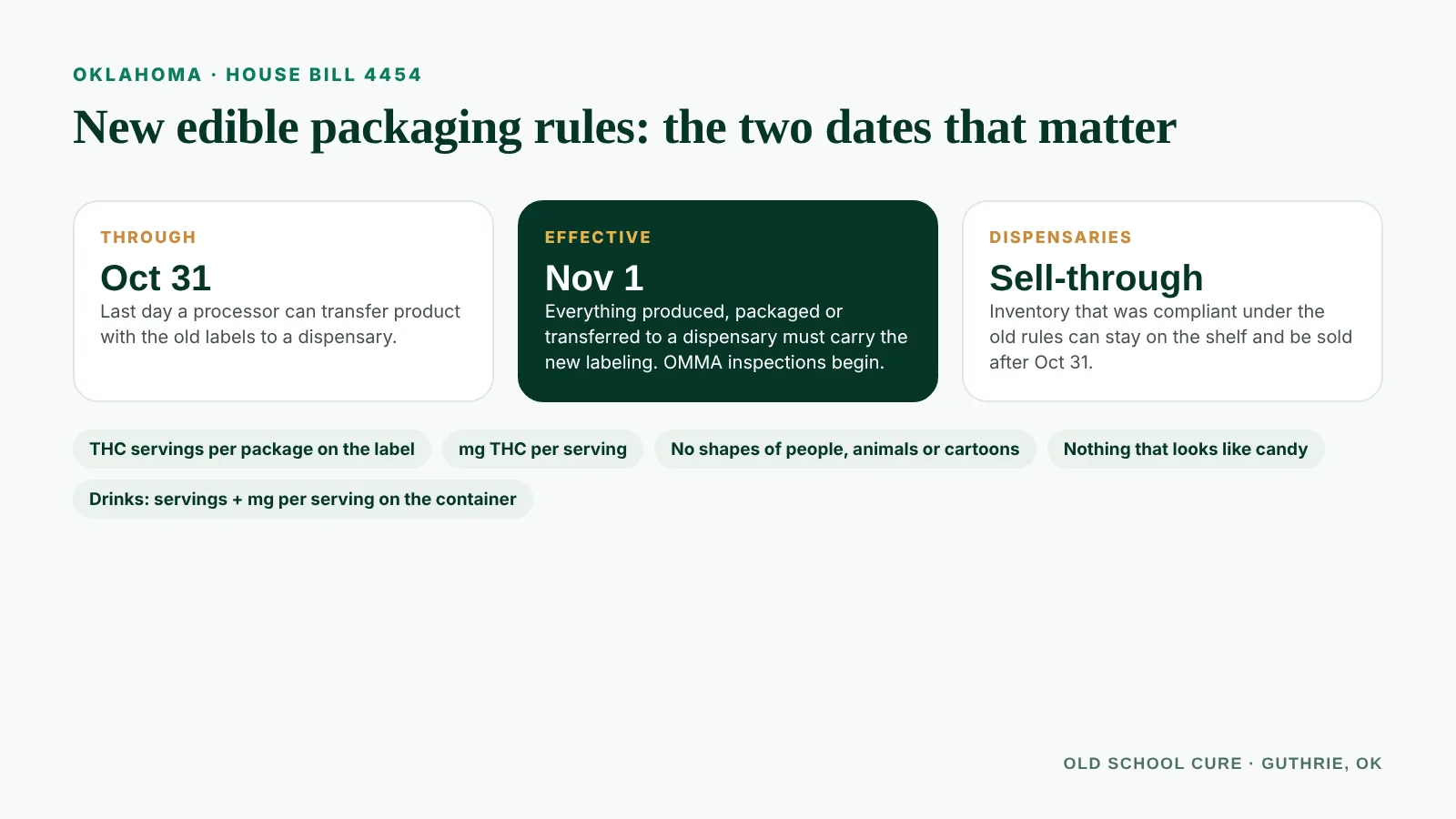
Processors: anything produced, processed, packaged or transferred to a dispensary on or after November 1 must carry the new labeling. OMMA's wording is blunt: after that date, "the transfer of any products to a dispensary that are not in compliance with HB 4454's new requirements is prohibited." Your last compliant delivery of old-label edibles is October 31.
Dispensaries: inventory that was compliant under the old rules can stay on the shelf and be sold on or after October 31. You don't have to pull it. You do have to be able to show it came in before the cutoff, which in practice means your Metrc transfer dates.
OMMA says its compliance inspection team is being trained ahead of the date so enforcement is consistent statewide. Read that as: expect the first inspections in November to look at edible shelves first.
What it means for us (and for the rosin on your shelf)
Old School Cure makes live rosin, hashish prerolls, donut prerolls and rosin carts. None of those are edibles, so nothing on our labels changes on November 1. The serving-count rule is the one piece worth copying anyway: our jars already state net weight and the lab numbers, and I'd rather over-inform a patient than get a call from a dispensary asking what a "serving" of rosin is.
Where it does touch us is on the dispensary side. Buyers are going to be busy re-labeling, returning and re-ordering edibles in the last week of October. If your rosin reorder slips a week because of that, text us and we'll hold stock.
The flavoring email that wasn't
In early October a lot of licensees got an email from the OMMA Labs address about flavoring and coloring ingredients in production batches. People panicked, including a couple of processors I talked to who started pricing out unflavored runs. On October 8 OMMA said the email went out in error and that "no changes to rules or requirements regarding flavoring and coloring ingredients are taking place at this time."
Rule of thumb: if it isn't on the OMMA News page on oklahoma.gov, it isn't a rule yet. The agency itself lists only three official channels: its official email address, the OMMA News webpage, and its official social accounts.
Other 2026 bills worth a bookmark
OMMA's Executive Advisory Council published a handout of this year's legislation back in February. Not all of it passed, and the handout doesn't track status, but these are the ones that touch processors and dispensaries directly:
- HB 3013 adds named pesticides and thresholds to required testing of harvest and production batches. If you buy fresh frozen from growers, their pesticide panel is your problem too.
- HB 3143 extends the moratorium on new commercial licenses to August 2028 and blocks the sale of a license that's under investigation.
- SB 1092 requires growers to file odor-control plans by January 1, 2027.
- SB 1822 creates a $500 research license for studying patient-reported outcomes. For a solventless maker, that's the first legal path to collecting real data on how rosin patients do versus distillate patients.
- SB 1104 would push Metrc toward real data exchange: API submissions and automated discrepancy reports. Overdue.
- County taxes: HB 3314, SB 1846 and SB 2053 all let counties or cities add their own tax on retail sales, one of them up to 10%. Watch your local ballot.
A checklist for the last week of October
- Processors: schedule your final old-label edible deliveries so they land by October 31. Keep the manifests.
- Dispensaries: note the receive date on every edible SKU so you can show it was transferred before the cutoff.
- Both: pull any packaging with cartoon art, animals or candy shapes now. It's the easiest thing for an inspector to spot from the doorway.
- Check your lab panel against OAC 442:10-8-1, the testing rule that was last amended in September 2025. HB 3013 may add to it.
If you're a licensed dispensary and want to see how our labels are laid out, every lab result is on the live menu. Questions about compliance on our products go straight to me.